Heels & Horsepower Magazine

COVID-19 and insurance claims

Every driver should know what the stance of their insurer is with regard to post-curfew driving

– eugene herbert, managing director of MasterDrive

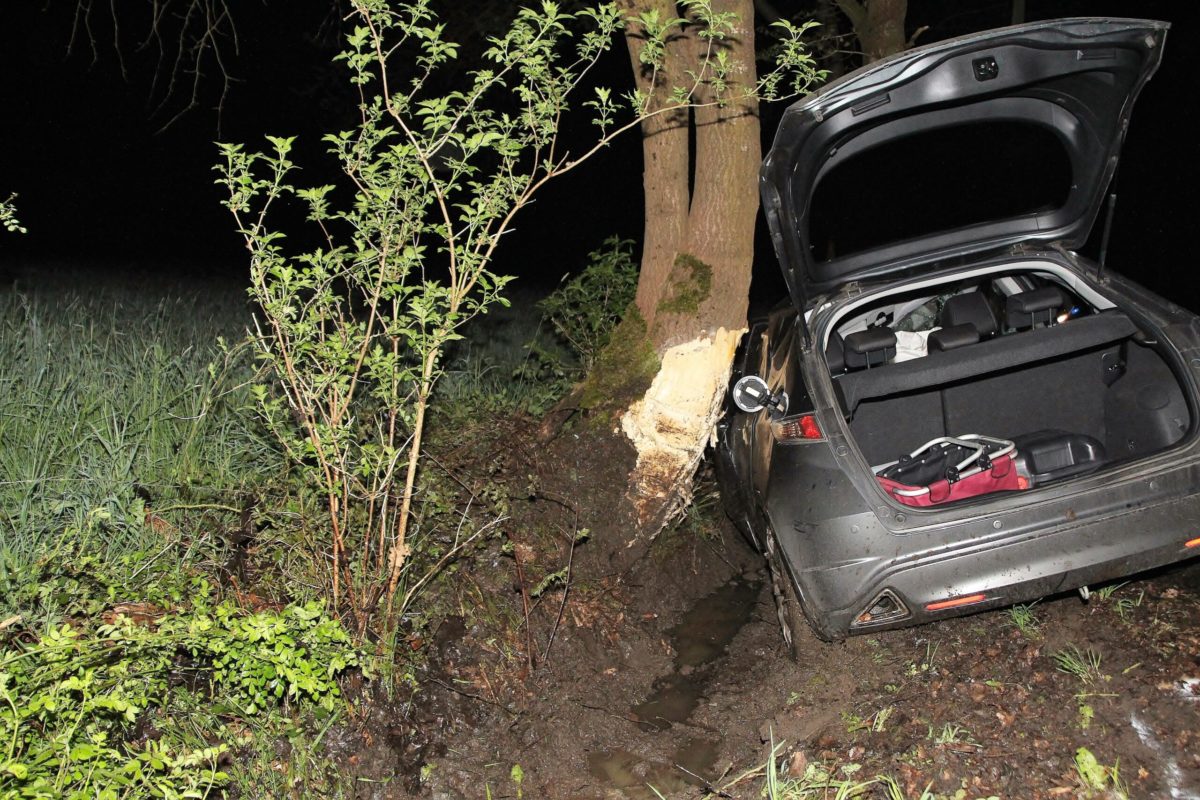
South Africans are rejoicing at the news that lockdown restrictions have been lowered to level two. This will allow drivers to move more freely between provinces but the curfew remains in place. Some drivers are questioning what are the insurance consequences of driving after curfew and being involved in a crash.

The managing director of MasterDrive, Eugene Herbert, says the company consulted their insurers to provide some context. “Our insurers say that a claim for a crash after curfew would not be rejected on those grounds alone. They, however, encourage drivers to avoid being on the road after 10pm unless it is an emergency.

“Additionally, while they can speak to their own policies about the validity of claims that occur after 10pm, this may vary between insurers. Every driver should know what the stance of their insurer is with regard to post-curfew driving.

This is especially so for those driving home from a late shift and drivers who are legitimately allowed on the road at that time. Speak to your insurer now about what they expect and your unique circumstances rather than argue it after the fact,” says Herbert.

It is a folly to think that you have no chance of crashing on your quick trip to the shop down the road

– EUGENE HERBERT, MANAGING DIRECTOR OF MASTERDRIVE


Cancelling insurance

Drivers trying to reduce their monthly expenses are also advised against cancelling their insurance premiums. “Even if you will still be working from home for the foreseeable future, cancelling your insurance can have numerous negative results. Primarily, insurance is there to protect you when the unexpected happens, whether this is vehicle theft or a crash. As crime is expected to rise in the coming months cancelling insurance is a risky decision.

“Additionally, it is a folly to think that you have no chance of crashing on your quick trip to the shop down the road. Research says that at least half of all crashes happen five minutes away from home because people drive with an ‘auto’ mindset, face an increased chance of being involved in a parking lot collision and have a greater tendency to drive distracted. Ultimately, it could cost you thousands more,” says Herbert.

Find out what your coverage will be if you are caught out after curfew

– EUGENE HERBERT, MANAGING DIRECTOR OF MASTERDRIVE

Other disadvantages of cancelling your insurance for a brief period include

  • Higher premiums once you resume insurance coverage as your risk profile will be higher. 
  • Breach of contract if your vehicle is still under finance, which can put you at risk of losing the vehicle.

In both of these scenarios it pays to know where you stand. “Find out what your coverage will be if you are caught out after curfew, for whatever reason, or if you qualify for a reduction while working from home. Either way, knowledge is power when you make a decision related to your insurance coverage,” says Herbert.

Learning To Read The Stars: How car safety ratings work

One-star or five-star? What determines car safety ratings

Everyone knows that vehicle safety is a vital component of the vehicle manufacturing process and many people have heard of the Euro NCAP five-star safety rating system. However, not many consumers understand what safety ratings are, how they are determined nor how to make use of them when identifying a suitable vehicle to purchase.

Here’s what you need to know…

The frontal tests are performed at 64 km/h into a deformable barrier.

The Euro NCAP five-star safety rating system is designed to help consumers, their families and businesses compare vehicles more easily and to help them identify the safest choice for their needs. It is a voluntary vehicle safety rating system created by the Swedish Road Administration, the Fédération Internationale de l’Automobile and International Consumer Research & Testing, and backed by the European Commission, seven European governments, and motoring and consumer organisations in every EU country. Other areas with similar (but not identical) programmes include Australia and New Zealand with ANCAP, Latin America with Latin NCAP and China with C-NCAP. 

The side impact tests are performed at 50 km/h.

They publish safety reports on new cars, and awards ‘star ratings’ based on the performance of the vehicles in a variety of crash tests, including front, side and pole impacts, and impacts with pedestrians. The top overall rating is five stars.

The safety rating is determined from a series of vehicle tests, designed and carried out by Euro NCAP. These tests represent, in a simplified way, important real-life accident scenarios that could result in injured or killed car occupants or other road users. While a safety rating can never fully capture the complexity of the real world, vehicle improvements (including technology developed over the past years), bring about high safety standards to the benefit to motorists all over the world.

The side impact pole test is performed at 32 km/h.

The frontal tests are performed at 64 km/h into a deformable barrier and is designed to represent an impact with a vehicle of similar mass and structure as the car itself. The side impact tests are performed at 50 km/h, and the side impact pole test is performed at 32 km/h. The pedestrian safety tests are performed at 40 km/h.

From 1 January 2009, the system adopted the rear-impact (whiplash) test as part of the new crash-test regimen. This new rating system focused on the overall score on pedestrian protection as Euro NCAP were concerned that car manufacturers were too fixed on occupant safety rather than the safety of those outside the vehicle. 

The five-star safety rating system continuously evolves as older technology matures…

THE MORE STARS THE BETTER: The number of stars reflects how well the car performs in Euro NCAP tests, but it is also influenced by what safety equipment the vehicle manufacturer is offering in each market. So a high number of stars shows not only that the test result was good, but also that safety equipment on the tested model is readily available to all consumers in Europe. 

The star rating goes beyond the legal requirements and not all new vehicles need to undergo Euro NCAP tests. A car that just meets the minimum legal demands would not be eligible for any stars. This also means that a car which is rated poorly is not necessarily unsafe, but it is not as safe as its competitors that were rated better.

The pedestrian safety tests are performed at 40 km/h.

LOOK OUT FOR THE LATEST RESULTS :  The five-star safety rating system continuously evolves as older technology matures and new innovations become available. This means that tests are updated regularly, new tests are added to the system and star levels adjusted. For this reason the year of test is vital for a correct interpretation of the car result.

THE LATEST STAR RATING IS ALWAYS THE MOST RELEVANT:  The latest star rating is always the most relevant and comparing results over different years is only valid if the updates to the rating scheme were small. Recently, the inclusion of emerging crash avoidance technology has significantly altered the meaning of the stars.

The following provides some general guidance as to what safety performance the stars refer to in today’s system:

5 STARS: Overall good performance in crash protection. Well equipped with robust crash avoidance technology.

4 STARS: Overall good performance in crash protection; additional crash avoidance technology may be present.

3 STARS: Average to good occupant protection but lacking crash avoidance technology.

2 STARS: Nominal crash protection but lacking crash avoidance technology.

1 STAR: Marginal crash protection.

It is important to note that testing is not mandatory, with vehicle models either being independently chosen by Euro NCAP or sponsored by the manufacturers. That said, it is in the best interest of car manufacturers to have their vehicles tested as car buyers are just as interested in safety as they are about performance. 


The Modern Woman’s Guide to Replacing Worn Wiper Blades

Wiper blades provide the driver with a clear view out of the windscreen and quickly and easily wipe away water, leaves, dust and even bird poo!

Because wiper blades are made of rubber, they naturally deteriorate over time, and have a rather short life span.  They need to be replaced when you notice the following defects: 

  • Streaking when they wipe away water
  • Unusual noises
  • Irregular movements
  • Ragged or cracked blades

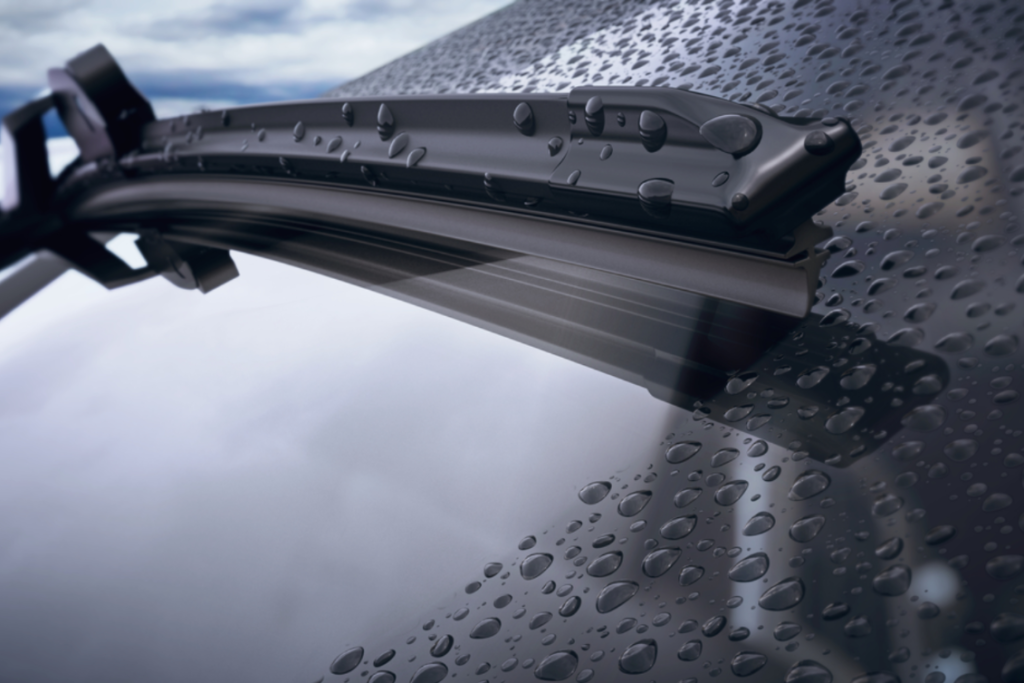
Some modern cars have extremely technical wiper blade mechanisms and require the attention of a technician.  For other cars though wiper blades are still quite basic and can be changed quickly and without much fuss.  But before going into the step-by-step tutorial on how to do so, we first need to understand that wiper blades are generally made of three basic parts: the lower wiper arm that extends from the base of the windscreen, the metal or plastic blade attached to the lower arm, and the actual rubber blade which is the portion which is in contact with the windscreen.  

Here are the basic steps to follow when changing a wiper blade. 

Step 1: Raise the metal or plastic arm from the windscreen and allow it to stand unaided in its natural position which is at a slight angle to the windscreen.  Make sure it soft-locks in that position as the wiper blade is spring-loaded and could easily snap back against the windscreen, pinching your fingers or damaging the screen.

Step 2: Unlock the old, damaged wiper blade: Look at the joining where the rubber portion of the blade meets the metal arm and identify the small plastic stopper holding the blade in place.  Press the stopper and unhook the old rubber blade to separate it from the metal arm. 

Note: 

  • Use one hand to hold the wiper blade at all times to prevent it from snapping back against the windscreen
  • Protect your windshield with a folded towel just in case the arm accidentally snaps back while you attempt to change the wiper blade.
  • Some wiper blades may have pins rather than hooks

Step 3:Slide the new rubber wiper into the same end of the arm where you pulled the worn blade from and gently pivot the new wiper until the hook snaps into place to secure it.  Slowly release the wiper blade back against the windscreen

Step 4: Repeat Step 3 to replace the other wiper blade.

Step 5:Test that you have replaced the blades properly and that they work, by allowing the reservoir water to run down the windscreen and turning on the wiper blades.  They should wipe the water away noiselessly, and without streaking.

What are ISOFIX fittings?

There is much talk about child in-car safety and one of the most common ways to ensure the safety of your precious cargo is with the aid of ISOFIX fittings.  But what exactly are they and how do they work?

The word ISOFIX is derived from the words “International Safety Organization” (ISO) and “Fixation” (FIX).  It is the international standard for attachment points for child safety seats in passenger vehicles.  They are U-shaped brackets welded to the chassis of a car for the sole purpose of securing an ISOFIX compliant child seat or base. Almost all cars come standard with ISOFIX points.  They are not optional extras nor can they be removed.  Should the car owner not need to use them, they remain unobstructive and do not interfere with passenger seating comfort.

Why do I need them?

Prior to ISOFIX fittings and ISOFIX compliant car seats, there was a myriad of different sizes and shaped of car seats on the market.  It can’t have been easy for parents to know which car seat was best for their child. ISOFIX however was designed to give parents peace of mind and security, and by virtue of their design, added protection for children in the event of an accident.

Does my car have them?

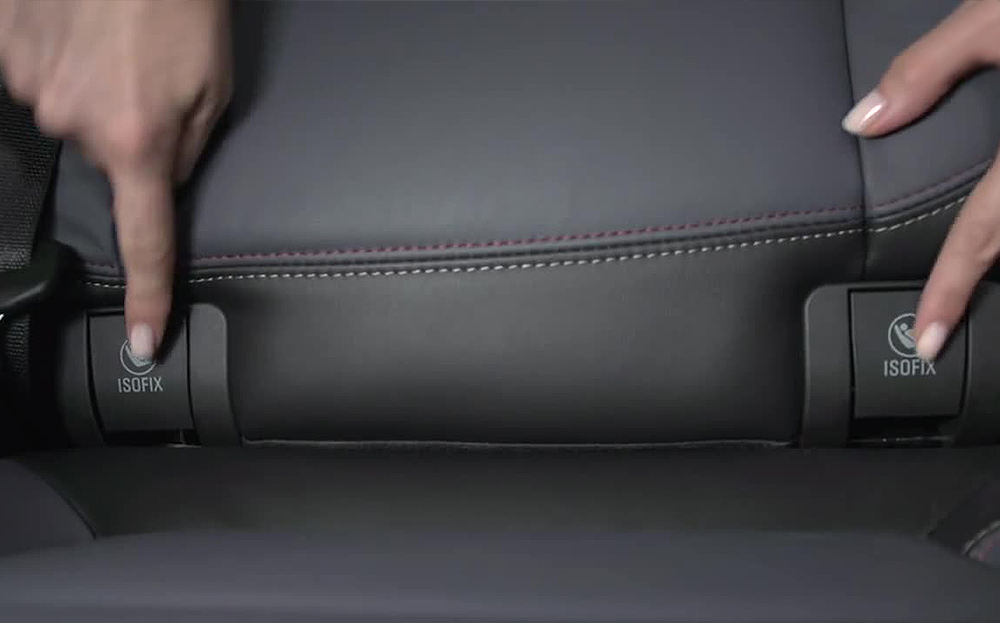
Most manufacturers mark the location of the ISOFIX fittings with either the words ISOFIX or a symbol.  Some are covered with hard plastic flaps whereas others are covered by the upholstery of the vehicle.  They are generally located either in the front passenger or rear seats. 

How do I find them?

To identify them, push your hand through the gap where the backrest and seat meet and run it across from one end to the other. Within seconds you will come across the first metallic U-shaped fitting. Continue sliding your hand across the gap until you locate the second.

What do they do?

Those with more grey hair than they care to admit will remember a time when in-car child safety meant securing the car seat with the use of seatbelts and a prayer for the best!  ISOFIX fittings however, keep the car seat firmly in place drastically reducing the possibility of your child tumbling out of his seat in the event of an emergency braking scenario.  

Asides offering optimal safety, ISOFIX and compliant products include:

  • Ease of use
  • Quick and simple to install
  • Convenience

ISOFIX fittings in a car are so important that they have become major considerations in the car buying process.  They minimise the risk of incorrectly installing a car seat and provide a solid and permanent connection between the car and the framework of the child seat.  Should you be in the family way, ISOFIX compliant car seats are a bit pricey but then again, what price wouldn’t you pay to ensure your child’s safety?